Jackbit license details changed around the Jack.com transition

Table of Contents
- Curaçao is the consistent part of the licensing picture
- Two operator names and two licence numbers appear around the rebrand
- Offshore licensing changes the route to redress
- Escalate a dispute in a clean sequence
- A small evidence pack is more useful than a long narrative
- Questions that matter before relying on a licence claim
- Read Jackbit’s licence position as a transition, not a single static record
Section element
Regulation and dispute context
Jackbit is tied to Curaçao licensing, but the operator name and licence number differ across records from before and after its move to Jack.com. That distinction matters when you need to identify the contracting entity or decide where a complaint should go.
Section element
- JurisdictionCuraçao
- Brand transitionJackbit → Jack.com
- Operator referencesRyker B.V. / Data Link Digital B.V.
- Licence recordDifferent numbers appear across records
Curaçao is the consistent part of the licensing picture
Across Jackbit and its successor identity, the jurisdiction remains Curaçao. The inconsistency appears lower down the stack: different records name different operating companies and licence numbers around the rebrand. For a reader, that means the country-level licensing context is clearer than the exact entity-number pairing.
That distinction is useful because a licence is not just a logo in a footer. In a dispute, the details that matter are the legal entity named in the terms, the licence information shown for the service you actually used, and the records attached to your account. When a brand changes name or operator details, older reviews can remain online long after the underlying contractual information has moved on.
The Jackbit identity also matters because the brand moved to Jack.com in 2026. The site shell here remains Jackbit so the reference stays coherent, while the licence record needs to acknowledge that transition rather than forcing older and newer operator details into one artificial answer. For how that rebrand affects sign-in and cashout friction, see the Jackbit account guide.
Two operator names and two licence numbers appear around the rebrand
Ryker B.V. and Data Link Digital B.V. both appear as operators associated with Jackbit or Jack.com, alongside different Curaçao licence numbers. Because those details conflict, choosing one number and presenting it as universally applicable would erase the timing problem created by the rebrand.
| Field | Source set A | Source set B | Reader consequence |
|---|---|---|---|
| Operator | Ryker B.V. | Data Link Digital B.V. | Match the entity to the terms that applied to your account |
| Licence number | OGL/2024/1800/1049 | OGL/2024/1562/1139 | Do not merge the two into a single licence identity |
| Jurisdiction | Curaçao | Curaçao | The jurisdiction is the stable element |
The practical reading is therefore temporal rather than binary: the operator appears to have changed around the Jackbit-to-Jack.com transition. If you are documenting a complaint, capture the legal entity and licence text visible when the relevant deposit, bet or withdrawal occurred. A saved capture or copy of the terms can be more useful than relying on a later review page that may describe a different stage of the brand.
Payment evidence matters just as much. Transaction hashes, destination addresses and withdrawal records can establish what happened on-chain even when support correspondence is incomplete. The Jackbit payments guide explains the payment flow and the difference between platform claims and observed withdrawal timing.
Offshore licensing changes the route to redress
A Curaçao licence is an offshore framework for many international players. It does not turn the casino into a locally regulated service in every country where a visitor can reach the site, and it does not replace the gambling rules that apply where the player lives. Local legality therefore has to be checked separately in the player’s own jurisdiction.
What the licence can still provide
- A named regulatory jurisdiction rather than a completely unlicensed operating claim.
- A legal and contractual reference point when identifying the operator behind the service.
- A possible escalation route after the casino’s own complaint process has been used.
What it does not automatically provide
- Local consumer remedies in the player’s home country.
- A guarantee that every payment dispute will be resolved in the player’s favour.
- A universal statement that the service is legal to use everywhere.
The result is a more document-heavy dispute process. A player may need to show not only that a balance or withdrawal existed, but also which operator terms applied, which verification requests were made, and how support responded. The farther the dispute moves from the casino’s own support channel, the more useful a chronological record becomes.
Escalate a dispute in a clean sequence
When a withdrawal or account restriction becomes contentious, scattered messages make the issue harder to reconstruct. A simple escalation sequence keeps the factual core intact and reduces the chance that the complaint turns into an argument about missing context.
- Freeze the timeline. Save the date and amount of the deposit or withdrawal, the game or bonus context if relevant, and every support message tied to the issue.
- Identify the entity shown to you. Record the operator name, licence text and terms that were presented on the service at that time. This is especially important because Jackbit and Jack.com references span different operator details.
- Use the casino’s internal support process first. State the requested remedy clearly and attach transaction evidence rather than sending multiple overlapping explanations.
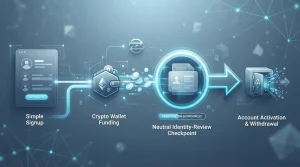
- Respond to verification requests carefully. Jackbit uses risk-based KYC that can appear at withdrawal or compliance review, so keep copies of what was requested and what you submitted.
- Escalate with the same record set. If internal support does not resolve the issue, use the current regulatory complaint route associated with the entity and licence shown in your account-facing legal information.
This sequence does not guarantee an outcome. It does make the dispute easier to audit because every step points back to a date, document or transaction. If verification is the point of friction, the account and KYC guide explains how withdrawal-stage checks can differ from the registration experience.
A small evidence pack is more useful than a long narrative
For crypto payments, the strongest evidence is often concrete and portable. A transaction hash can establish a transfer independently of a casino balance screen. A saved copy of the terms can show which rules were displayed. A support transcript can show whether the operator asked for identification, video verification or source-of-funds information before processing a withdrawal.
- Account record
- User ID or account identifier, plus the email or login method used.
- Payment record
- Transaction hash, asset, amount, sending wallet and destination details where relevant.
- Terms record
- The legal entity, licence text and rules that applied when the event occurred.
- Support record
- Messages, ticket numbers and timestamps showing the sequence of the complaint.
- Verification record
- What was requested, when it was requested and when it was supplied.
Keep sensitive identity documents secure and share them only through the operator’s stated verification channel. The goal is not to circulate personal data widely; it is to preserve enough evidence to show what happened and which contractual relationship governed the account.
Questions that matter before relying on a licence claim
Where is Jackbit licensed?
The Jackbit operation is consistently tied to Curaçao licensing, although operator entities and licence numbers differ around the transition to Jack.com.
Why do Jackbit licence details differ across records?
The differences coincide with the Jackbit-to-Jack.com transition. Ryker B.V. and Data Link Digital B.V. appear alongside different Curaçao licence numbers, so the records indicate an operator transition rather than one stable entity-number pairing.
Does a Curaçao licence make Jackbit legal everywhere?
No global licence determines legality in every country. Gambling rules depend on the player’s own jurisdiction, so local law still needs to be checked.
What should a player keep if a dispute occurs?
Keep the account identifier, transaction hashes, payment records, relevant terms, support messages and a clear timeline. Those records make an internal complaint and any later escalation easier to follow.
Read Jackbit’s licence position as a transition, not a single static record
The stable fact is Curaçao. The unstable details are the operator entity and licence number cited around the move from Jackbit to Jack.com. For a real complaint, the most useful record is therefore the entity and licence text attached to the service when the disputed event happened, backed by transaction and support evidence. That keeps the conflicting entity-number records separate instead of forcing them into one value.